ServicesScreen Cleaning & Repair
Window Screen Cleaning & Repair in Harleyville
Dirty screens make clean glass look gray, and a torn one lets every mosquito in. We take your screens down, wash them by hand, and fix torn mesh, loose spline and bent frames. You get screens that look clear and fit snug again.
What This Service Covers
Screens catch dust, pollen, spider webs and the gray film that builds up over a few seasons. Once they get dirty, they block light and make freshly washed windows look dull. Washing them is the quickest fix for windows that still look hazy after cleaning.
Repair is a separate question. A small pinhole can sometimes be patched. A tear, a sagging panel or mesh pulling out of the frame usually needs new mesh and new spline. A bent or cracked frame may need straightening or new corners. We look at each screen and tell you which one it needs, and why.
Some people call us for screens alone. Others add it to residential window cleaning so the glass and the screens get done the same day.
What We Do to Your Screens
Hand washing
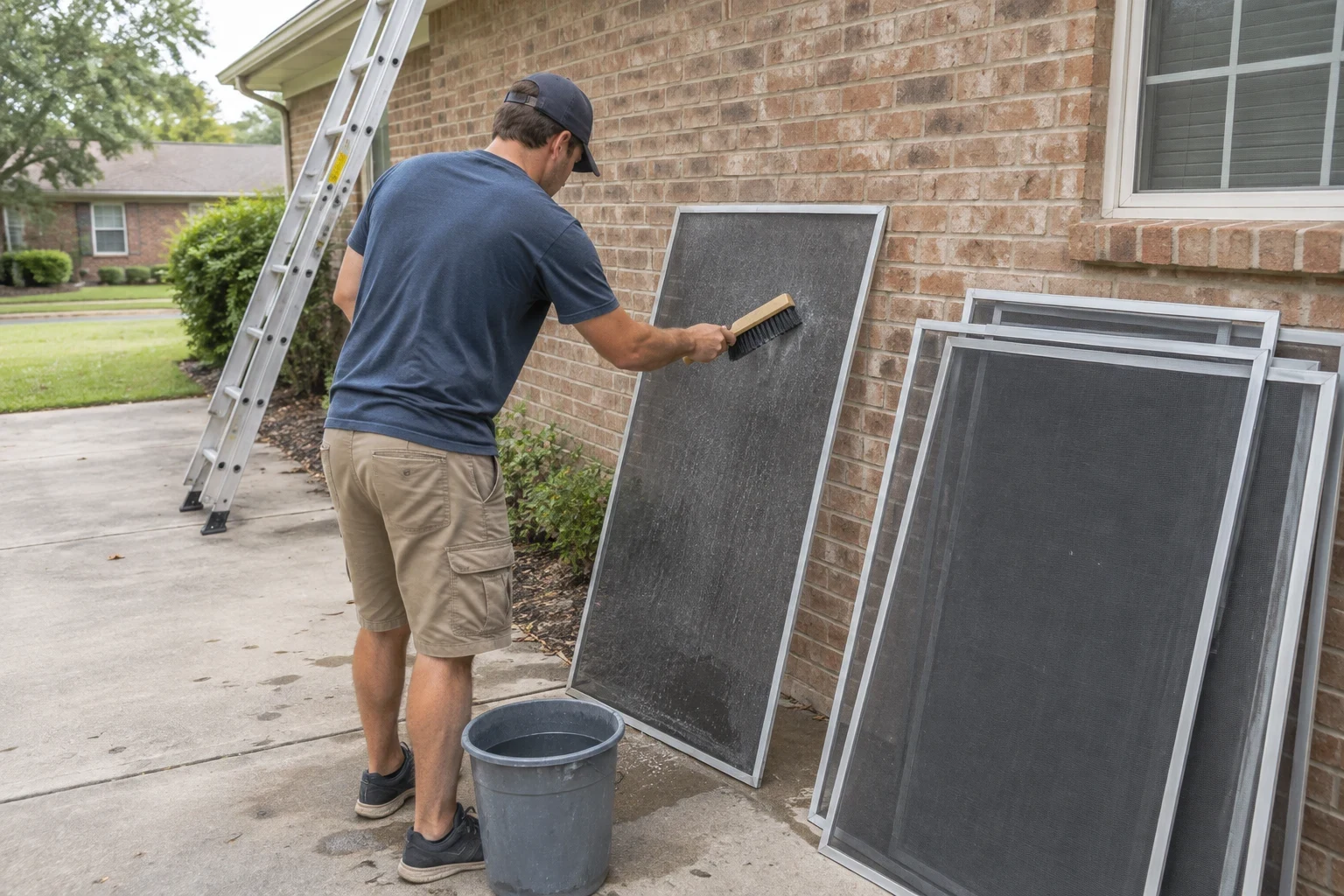
We brush each screen with mild soap and a soft brush, then rinse it with low water pressure. High pressure can stretch fiberglass mesh, so we don't use it.
Frame wipe-down
Frames collect grime in the channel where the mesh sits. We clean that too, so dirt doesn't streak back onto the glass the next time it rains.
Rescreening
For torn or sagging mesh, we pull the old spline, lay in new mesh and roll new spline in tight. Fiberglass is the common choice. Aluminum and pet-resistant mesh are options too.
Frame and hardware fixes
Bent frames, cracked corner pieces, missing pull tabs and worn tension springs are what keep a screen from sitting right. We straighten or swap these parts when the frame is still worth saving.
Careful reinstall
We put every screen back in the window it came from and check that it seats flat with no gaps at the edges.
Signs Your Screens Need Attention
- Windows look gray from outside
- If the glass is clean but the house still looks dim, the screens are usually the reason.
- Yellow dust on the mesh
- Spring pine pollen sticks to screens and holds moisture. Left there, it turns into a dark film that is harder to wash out.
- Holes or tears
- Even a small hole lets in bugs. Tears also tend to grow once the mesh starts to give.
- Mesh pulling from the frame
- When the spline dries out and shrinks, the mesh sags or pops loose at a corner. That calls for new spline, not a patch.
- Screen won't sit in the window
- A screen that rattles, falls out or leaves a gap usually has a bent frame or a missing spring or tab.
How the Visit Goes
- 1
Count and check
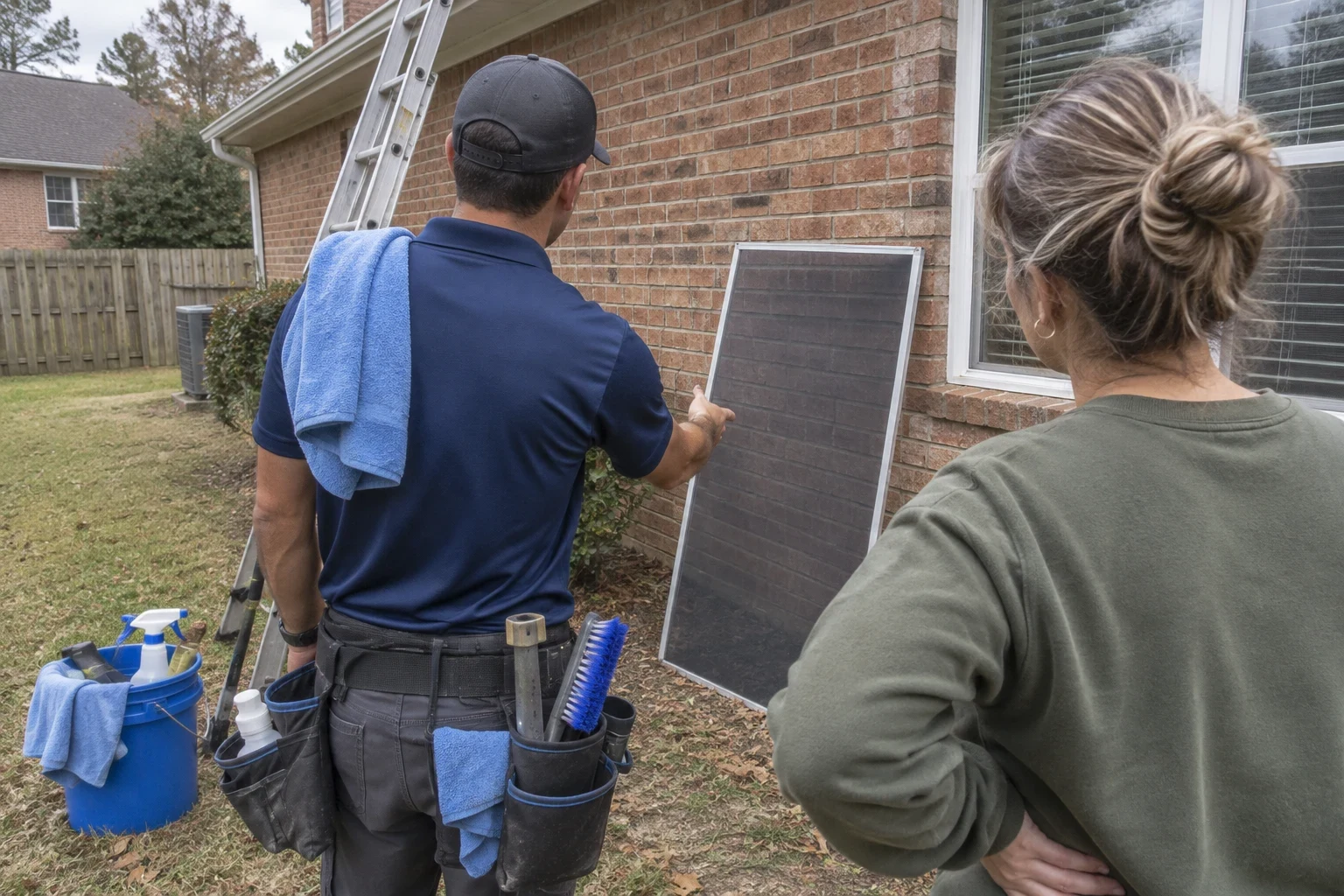
We walk the outside of the house, take down each screen and mark where it goes. Then we look at the mesh, spline and frame on every one.
- 2
Tell you what we found
You hear which screens just need washing and which need repair, before any repair work starts. You decide what gets done.
- 3
Wash and repair
Washing happens on site. Most rescreening can be done right in your driveway. A frame that needs a part we don't have on hand may take a second visit.
- 4
Reinstall and clean up
Screens go back in their own windows, and we pick up old mesh, spline and any debris before we leave.
What Moves the Price
Screen work is priced by what your screens actually need, not by a flat package. Washing a screen costs less than rescreening it, and a frame repair adds parts and time. Give us a rough count and a quick rundown of any tears, sagging mesh or bent frames, and we can give you a straight quote by phone.
- Number and size of screens
- More screens means more time. Large patio or porch screens take longer than standard window screens.
- Wash only or repair
- Plain washing is the lowest cost. Rescreening adds new mesh and spline for each panel.
- Mesh type
- Standard fiberglass costs the least. Aluminum and pet-resistant mesh cost more for the material.
- Frame condition
- Bent frames, broken corners and missing hardware add parts and labor. A badly damaged frame may need to be replaced instead of fixed.
- Second-story access
- Upper screens that have to come off from a ladder take more time than ones we can reach from the ground.
Screen Cleaning and Repair Questions
- Can you patch a small hole, or do I need a whole new screen?
- A pinhole or small puncture can often be patched. A tear longer than an inch or two, or mesh that is brittle all over, is better rescreened. Patches on old mesh tend to fail at the edges. We'll tell you which makes sense for each screen.
- Do I need to take my screens off before you come?
- No. We take them down ourselves and mark each one so it goes back in the right window. If any are already stored in a garage or shed, just let us know where they are.
- Which mesh should I pick for a rescreen?
- Fiberglass works for most windows and is the most common. Aluminum holds its shape well but can dent. Pet-resistant mesh is thicker and stands up to claws, though it blocks a bit more light. If you aren't sure, we can show you the differences on the day.
- How often should screens be washed?
- Once a year is enough for most homes. If you're near a lot of pine trees or a dirt road, washing after the spring pollen season helps keep the film from setting in.
- Can you do screens and windows the same day?
- Yes. Many people pair this with residential window cleaning, and some add window track and sill cleaning too. Doing them together keeps dirty screens from smudging glass that was just washed.
Get Your Screens Back in Shape
Tell us how many screens you have and what's wrong with them. We'll give you a plain answer on washing versus repair and what it will cost.